Services

Forest Practice Compliance

The Forest Practices Acts (FPA) in Oregon and Washington establish comprehensive standards for any commercial activities involving the establishment, management, or harvesting of trees on non-federal forestlands. Enforced by the Oregon Department of Forestry and the Washington Department of Natural Resources, these regulations aim to ensure a sustainable yield of forest resources while protecting soils, watersheds, and wildlife habitats.

Both FPAs require landowners to comply with permitting and operational guidelines that include measures for resource protections, oftentimes requiring written plans and map productions. Urstadt Land and Timber provides specialized services to assist landowners in navigating these regulations.

Forest Management & Cost Sharing Programs

We offer extensive expertise in managing all aspects of forestry, combining traditional management strategies with opportunities for property enhancement through cost sharing programs. Effective forest management requires a deep understanding of various interrelated disciplines, including ecology, biology, silviculture, hydrology, soil science, land use planning, and engineering for roads and logging systems.

Cost sharing programs can be competitive, but there may be potential for us to provide assistance in identifying and securing cost sharing programs to support your forest management goals. Many funding programs are designed to promote the development of high-quality forestland and the protection of natural resources. These programs can help landowners offset costs associated with sustainable forestry practices, habitat improvement, and long-term stewardship projects. By aligning your management plan with the objectives of these funding initiatives, you may unlock financial resources to enhance your property while meeting conservation goals.

Timber Cruising, Evaluation & Appraisal

Urstadt Land and Timber has a specialty focus for the areas of Timber Cruising, Evaluation and Appraisal. We provide a high volume of this work due to the demand of this critical information used in most forest management decision making. In our timber cruising, we endeavor to implement a sampling design to accurately capture the variability of the timber stand based on the forest structure and terrain. The goal of a quality timber cruise is to be accurate for the timber stand’s log production value- often by achieving a sampling intensity to provide a statistically significant estimate of resource products which provides a scientific basis for confidence in the evaluation. Additionally, we rely on our vast experience and intuition to form our complete assessments. The consideration of hidden defects, logging production and damages are critical for accuracy. Timber Cruising requires knowledge and application of Forest Practices, while the Appraisal process involves all known factors to influence the valuation of standing timber. Evaluations are done as a management tool for the landowner to make informed decisions, without the strict professional standards demanded of appraisal.

We have experience in the evaluation and manufacturing of a wide variety of log products available to the Pacific Northwest, Northern California and Southeast Alaska. This includes; long and short transmission pole sales, export grades, veneer, oversize, domestic saw log, high elevation stands, pine forests, Western red cedar, Coastal redwood, hardwoods… and of course, also the difficult and problematic pieces of high disease, defect and utility.

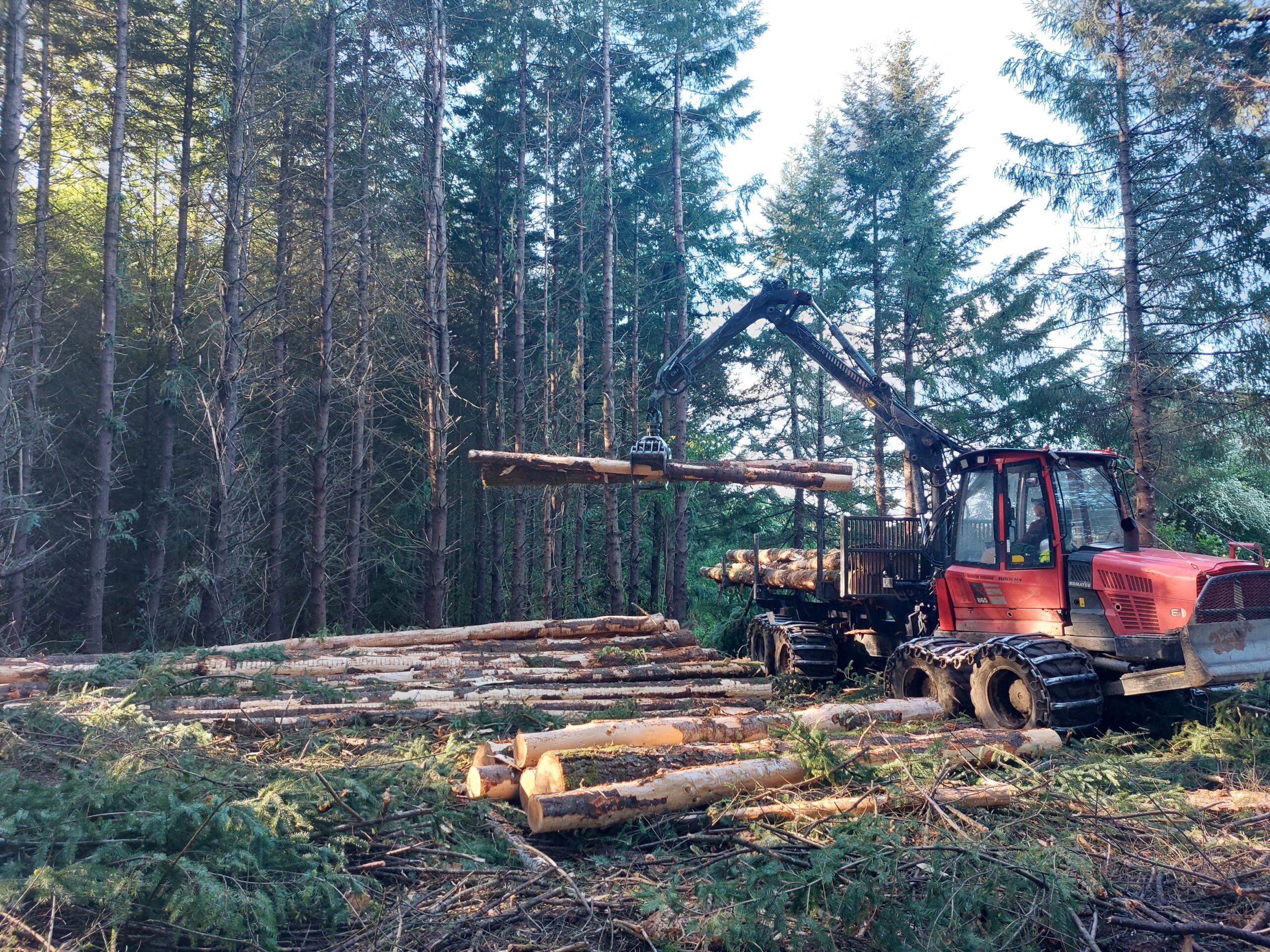
Timber Sale Management & Logging

When it comes time to harvest timber, landowners generally have three pathways to consider:

  1. Selling the timber in a lump-sum sale to a buyer,
  2. Coordinating the harvest directly by hiring a logging contractor,
  3. Working with a consulting forester to plan and manage the operation on their behalf.

Each option carries its own considerations—ranging from risk and responsibility to potential return. On our Landowner Resources page, we outline the advantages and trade-offs in detail to help you make an informed choice.

Timber Harvest: Our Process and Oversight

Whether preparing a timber sale for bid or coordinating harvest operations directly, the core principles remain the same. Effective harvest management begins with a clear understanding of the landowner’s goals and the specific conditions of the property.

Defining Objectives and Outcomes:
Every harvest plan starts by identifying what matters most—whether it’s maximizing revenue, improving forest health, enhancing habitat, or a combination of outcomes. We help clarify these priorities and outline a practical strategy to meet them, supported by value estimates that reflect the financial impact of each approach.

To support decision-making, we also provide a complete financial overview. This includes projected revenue, associated costs, tax considerations, and reforestation obligations—allowing you to evaluate trade-offs and move forward with confidence.

Pre-Sale Preparations: Before initiating a timber sale, it is crucial to undertake a series of preparatory steps that ensure a well-informed and effective process. This generally includes:

  • Timber Evaluation or Appraisal: Conducting an assessment to accurately estimate timber volume, quality, and potential market value. This helps in setting realistic expectations and provides a solid basis for negotiations.
  • Timber Harvest Layout and Mapping: This critical step determines much of the timber harvest’s physical character, including its production potential and the condition of the residual stand. The layout directly influences operational efficiency, environmental protection, and long-term site integrity. Clearly identifying key features—such as reserve areas, sensitive resources, and exclusion zones—is essential to ensuring that the logging design reflects both the land’s constraints and the landowner’s goals.
    When forest reserves or protected features are present, they must be precisely defined and made unambiguous in the field. Careful evaluation of log landing locations, potential road reconstructions, opportunities for better-aligned new roads, and the site’s drainage needs are all necessary to avoid future problems. Negligent layout decisions can result in degraded road surfaces, unnecessary soil disturbance, or sediment delivery into streams—leading to increased maintenance costs and potential regulatory issues.
    Mapping the proposed layout is not only helpful to the landowner and contractors, but also a requirement of the timber harvest permit process through the Department of Forestry (or Department of Natural Resources, where applicable). Taking the time to plan and communicate the design in detail helps protect the long-term value and function of the land.
  • Regulatory Compliance and Permits: Once the layout is complete, we assist with submitting the necessary notifications and permits required under the Forest Practices Act. These filings are not just formalities—they require accurate maps, a clear harvest plan, and defined protection strategies for sensitive areas such as streams, wetlands, and wildlife reserves. A well-prepared submission supports agency coordination, prevents delays, and helps avoid compliance issues that could lead to citations or rework. More importantly, it ensures the landowner’s intent is clearly documented and that operations proceed with shared understanding across all parties involved.
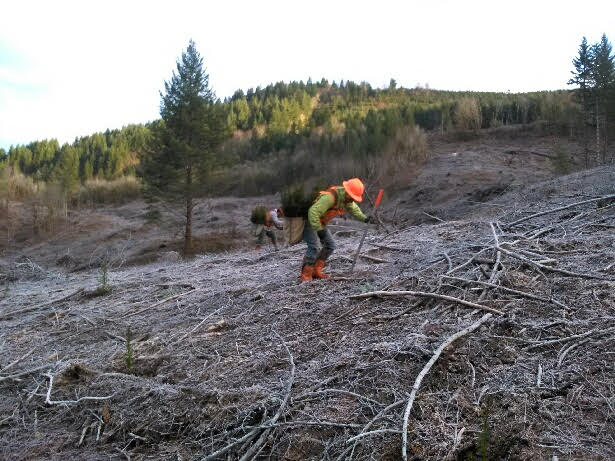
  • Reforestation Planning: The proper time to plan for reforestation is as soon as it’s determined that a timber harvest will occur. This early planning ensures that the landowner is fully informed of their responsibilities regarding reforestation. Moreover, understanding the associated costs early on allows for better budgeting and provides assurances that the reforestation process is carried out efficiently—with attention to quality site preparation, appropriate vegetation control, and the timely procurement of suitable trees.
    Planning in advance helps secure high-quality seedlings matched to the site’s growing conditions. The nursery industry reaches equilibrium each year based on prior orders, meaning that landowners who wait may be left with less suitable or lower-quality stock. Similarly, early coordination allows for more effective vegetation management and site preparation—critical components that directly influence seedling survival and long-term stand health.

    Unfortunately, many landowners suffer significant financial consequences when quality reforestation is not planned and executed. Expenses compound over time and across acreage, often resulting in costly setbacks. In addition to direct costs, failure to meet reforestation standards can result in the loss of forestland tax deferral status—triggering back taxes, penalties, and reassessment at higher non-forest deferral rates.
    Reforestation requirements vary by harvest type and region, making it essential to understand the standards that apply to your specific situation. For a more detailed overview, visit our Landowner Resource page for further guidance.

Optimal Log Marketing Plan: An effective log marketing strategy is essential to maximizing the financial return from your timber sale. While it may seem intuitive that logs are always delivered to the highest-paying destination, real-world decisions often reflect a balance of logistics, relationships, and timing.

Established connections between mills, buyers, and operators can shape delivery patterns in ways that are timely and familiar, however, it may not be in the best interest of the landowner. To evaluate log marketing options effectively, it’s important to maintain active contact with a broad network of buyers, understand current demand across product classes, and identify where particular grades and species are being competitively received. This includes comparing expected revenue with associated costs like hauling, trucking, and production—taking into account both market pricing and operational efficiency.

Strong communication plays a key role. Maintaining positive working relationships and dealing fairly across the board allows us to remain knowledgeable on shifting needs, special sorts, and competitive pricing opportunities as they arise. Our role is to help landowners navigate these dynamics with clarity—balancing opportunity and efficiency to support lasting value from every sale.

Contract Formation: Many people prefer to do business on a handshake, and there’s real value in trust and mutual respect. But timber harvest operations are not the right time to rely solely on verbal agreements, especially when parties are working together for the first time. These operations are dynamic and complex, involving multiple stages, regulatory oversight, and substantial financial implications. Even with the best intentions, unforeseen challenges can arise. Without a clear contract that anticipates these possibilities, the costs can be high and relationships can suffer.

A well-structured contract serves to protect all parties by establishing a fair engagement grounded in facts, mutual understanding, and clearly defined responsibilities. Our goal is to eliminate ambiguity and create a shared foundation of trust where each party knows what is expected, what is agreed upon, and how the operation will proceed.

For the client, the contract is a critical safeguard. It outlines the unique characteristics of the timber harvest, defines expectations for operational performance, and clarifies responsibilities around layout, compliance, road use, product handling, and protection of property resources. This process helps prevent liability, sets the terms for site protections, and includes dispute resolution procedures. Each agreement also requires contractors to carry comprehensive liability and loggers’ broad form insurance, further protecting the client from damages or legal exposure.

At the same time, our contracts are structured to account for the real risks and professional demands placed on the logging contractor and offer them due protections. Logging requires specialized skill, significant capital investment, and the ability to manage safety, personnel, and production under dynamic conditions. By providing a clearly defined scope of work, fair terms, a well installed harvest layout, and a dependable process for payment and scheduling, we help create an attractive and efficient project framework that supports effective execution and reliable compensation.

Selecting a Qualified Logger:
All the groundwork described prior must be completed or knowingly neglected, and the consequences of neglect fall squarely on the landowner. By taking responsibility for these critical early steps, we reduce overhead, risk, and time investment for the logging contractor. That, in turn, allows us to negotiate favorable terms and secure better overall value for the landowner.

Logging is a highly skilled profession. It requires not only technical ability and experience, but also a dependable support network, well-maintained equipment, and the logistical capacity to deliver consistent performance under variable conditions. There is far more to selecting a logger than securing a competitive rate. The operator’s skill, their available equipment, reputation in the community, and current scheduling availability all play key roles in determining the right fit for your project. This is the final step in preparing a harvest, selecting a capable and dependable partner to carry out one of the most important financial transactions your forestland will ever undergo.

Quality Control and Monitoring: Maintaining high standards throughout the harvest is essential for achieving the desired outcomes. We actively monitor all phases of the operation to ensure compliance with the contract and adapt to any unforeseen circumstances that may arise:

  • Contract Enforcement: Ensuring that all terms of the contract are rigorously followed, holding all parties accountable to the agreed-upon standards, practices, manufacturing and sales strategy. This focus on quality control protects the landowner’s investment and ensures a high standard of work.
  • Continued Monitoring: Regular site visits and assessments allow us to keep a close eye on the progress and address any issues as they arise, adapting to changing conditions and unforeseen challenges to keep the project on track.

Reporting and Communication: Transparent communication is a cornerstone of our service. We provide landowners with regular updates and detailed documentation, including:

  • Project Reporting: Comprehensive reports cover every aspect of the operation, from progress updates and challenges faced to solutions implemented and adjustments made along the way.
  • End-of-Project Summary: Once the harvest is complete, we deliver a full accounting of project costs, returns, giving the landowner a clear picture of the financial and operational outcomes.

Navigating Timber Harvest Taxes and Reforestation Costs: Understanding the financial implications of a timber harvest is crucial. We assist landowners with navigating timber harvest taxes, preparing the necessary documentation, and accurately accounting for reforestation expenses. This helps ensure compliance with state regulations and secures the continued productivity and value of the forestland.

Philosophy of Competence and Collaboration: Our philosophy is rooted in competence, building strong relationships, and creating a project environment that benefits everyone involved. We believe in fostering a collaborative team, encouraging trust and open communication, and proactively addressing both anticipated and unforeseen circumstances. By uniting the skills and expertise of all parties, we strive to deliver successful outcomes and a comprehensive, accurate end-of-project income and expense summary.

Consulting foresters add significant value to any timber harvest operation. Studies show that non-industrial landowners who work with consulting foresters achieve higher returns on their timber sales compared to those who do not. To learn more about the benefits of consulting foresters, you can read the NC State Extension article on this topic. For additional resources and to understand how we support small landowners, visit our Small Forestland Owner page.

Reforestation & Silviculture

Silviculture is the intentional and active management of forests to achieve specific, desired outcomes. This includes practices such as reforestation, vegetation control, prescribed burning, and managing stem density and spatial structure up to and including timber harvest. We have extensive experience managing forest conditions across both state and private ownerships, applying treatment strategies to guide stand development over time.

Our silviculture work integrates practical field insight with financial analysis to evaluate treatment options, forecast stand trajectories, and implement active management in support of landowner goals. We have a long history of reviewing past management actions for both our own work and that of our peers- allowing us to assess outcomes, compare performance, and refine our recommendations based on observed results. Our understanding of treatment costs and benefits is grounded in real-world data, and we work closely with trusted contractors to deliver high-quality silviculture services that support your forest’s growth and long-term value.

Written Plans & Permitting

Written plans are often critical in forestry—both to demonstrate compliance with state and regulatory requirements during operational notifications, and to support decisions such as investment analysis and project planning. Our strategic planning services are grounded in professional experience and supported by advanced tools and technology, allowing us to address complex technical challenges and optimize every detail for performance and practicality.

Mapping Services

We employ the advantages of advanced GIS technology and professional mapping software to produce high-quality maps for forest management and land assessment. These tools enable precise visualization of property boundaries, terrain features, and forest resources, allowing us to develop tailored management plans that reflect the unique characteristics of each area. Accurate mapping supports strategic decision-making, enhances operational efficiency, and ensures regulatory compliance, making it a critical component of effective forest stewardship. Landowners have much appreciated our map productions in being able to utilize them while navigating and managing their property, offering fresh perspectives on their ownership.

Expert Witness & Conflict Resolution

Our expertise has been instrumental in resolving various disputes, including timber deed and contract disagreements, timber harvest trespass cases, and inaccuracies in stream classification. We provide objective, fact-based analysis and professional testimony that support fair and informed outcomes in these conflicts. By leveraging our in-depth knowledge and experience, we help landowners and legal professionals navigate complex forestry-related disputes with clarity and confidence.

Service Partnerships

Managing forestland often involves navigating a complex network of activities and professionals across various disciplines. It can be challenging to find experts who not only specialize in their fields but also understand how their work interacts with forestland management and policy. To address this need, Urstadt Land & Timber has developed strong relationships with trusted professionals who bring valuable insights and expertise in the following areas:

  • Forestland Real Estate Specialists
  • Home Development
  • Oregon and Washington Land Surveying
  • Road & Bridge Engineering
  • Estate Planning and Legal Services

These collaborations allow us to provide comprehensive support for a wide range of forest management needs. Whether you require a referral or assistance in coordinating with these professionals, we are here to facilitate communication and represent your interests effectively. By working with experts who are well-versed in both their respective fields and the unique challenges of forest management, we ensure that you receive the best possible advice and service for your specific area of interest.